
PIR Sandwich Panels for Cold Rooms and Industrial Buildings
LIAOHE manufactures PIR insulated sandwich panels for overseas cold chain, food processing, logistics warehouse and fire-conscious industrial building projects. Factory-direct production supports customized panel thickness, steel facing, coating system, joint profile, accessories and export container loading plans.
Choose Your Panel Configuration
PIR Wall Sandwich Panels
For exterior walls and interior partitions, with wall joint, fixing, trim and opening details reviewed by drawings.
Typical uses: warehouses, workshops, partitions.
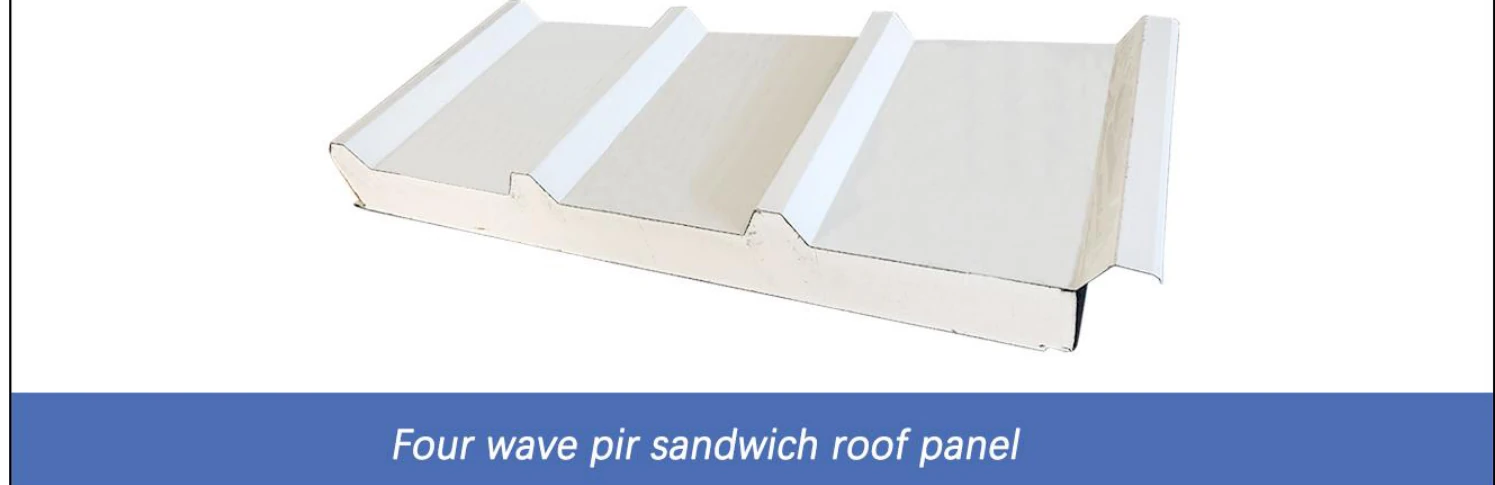
PIR Roof Sandwich Panels
For industrial roofing, with four-wave profile, side-lap, ridge, eave and flashing details reviewed by roof layout.
Typical uses: factories, warehouses, steel structures.
Core Parameters Buyers Check Before Ordering PIR Insulated Sandwich Panels
Use this section as a fast specification screen for PIR cold storage wall panels, PIR roof panels and industrial insulated wall systems.
Factory-Made PIR Panel System for Controlled-Temperature Buildings
PIR sandwich panels are built with two metal facings bonded to a rigid PIR insulation core. Compared with EPS panels, PIR provides stronger thermal performance. Compared with standard PU panels, PIR is often selected where better fire behavior and cold-chain energy performance are required.
LIAOHE supplies PIR insulated sandwich panels for cold rooms, food processing facilities, logistics warehouses, prefabricated buildings and industrial roof and wall envelope systems.
PIR Sandwich Panel Specification Checklist for Engineering Quotation
Send drawings, target temperature, panel layout and destination port for final selection.
| Product Name | PIR Sandwich Panels / PIR Insulated Panels |
|---|---|
| Core Material | Rigid PIR foam core for low thermal conductivity and improved fire behavior. |
| Core Density | 40–48 kg/m³ typical range, subject to final product configuration and project documentation. |
| Thermal Conductivity | Available according to the selected panel model and approved technical data sheet. |
| Panel Thickness | 30 mm, 50 mm, 75 mm, 100 mm, 120 mm, 150 mm, 180 mm, 200 mm, 220 mm, 250 mm; customized thickness subject to production confirmation. |
| Steel Facing Thickness | Common range: 0.4–0.8 mm. Selection depends on span, wind load, handling requirement, budget and local project specification. |
| Steel Facing Material | Pre-painted galvanized steel, galvanized steel, galvalume steel or stainless steel for specific hygiene / corrosion requirements. |
| Coating Options | PE, SMP, HDP, PVDF and project-approved coating systems. HDP / PVDF is recommended for tropical, coastal and high-humidity climates. |
| Surface Profile | Flat, micro-ribbed, ribbed, embossed or project-matched profile options for wall, ceiling and roof systems. |
| Joint System | Tongue & groove, double tongue & groove, concealed joint, roof overlap joint or cold room joint profile according to application. |
| Fire Performance | Available by tested panel model and approved test report. |
| Typical Applications | Cold rooms, freezer rooms, food processing plants, pharmaceutical storage, logistics warehouses, clean production areas, prefabricated industrial buildings. |
| Accessories | Ridge cap, corner trim, base flashing, parapet flashing, door/window trims, U-channel, fixing screws, sealant and related metal flashings. |
| Quotation Inputs | Application, operating temperature, panel thickness, steel thickness, coating, color, quantity, drawings, installation position and destination port. |
Engineering note: For freezer rooms, blast-freezing areas and large-span roof applications, thickness and steel facing must be reviewed together with operating temperature, humidity, span, wind load, fixing method and local code requirements.
To request a quotation, send these details through the Factory Quotation page. Spanish-language buyers can follow the Spanish Quotation Guide for the same process.
Where PIR Insulated Sandwich Panels Deliver the Strongest Value
PIR is not the cheapest core. It is selected when insulation performance, fire behavior and lifecycle energy cost matter.
Cold Storage Rooms
PIR cold storage wall panels and ceiling panels for fruit, seafood, meat, dairy and temperature-controlled warehouse projects.
Freezer & Chiller Rooms
Panel thickness and joint details reviewed according to operating temperature, room size and condensation control requirements.
Food Processing Plants
Insulated wall and ceiling systems for cleanable, thermally stable production and packaging environments.
Pharmaceutical Storage
Controlled-temperature rooms for pharmaceutical, medical and laboratory storage areas where stable insulation is required.
Logistics Warehouses
Lightweight insulated envelope systems for distribution centers, cold-chain hubs and industrial storage buildings.
Industrial Roof & Wall Systems
PIR roof panels and wall panels for projects needing thermal insulation plus better fire performance than EPS systems.
Review PIR cold room specification alongside Cold Room Panels for related panel systems and applications.
Configurable PIR Panel Details for Different Project Drawings
A professional quotation should not only quote square meters. It should confirm thickness, joint, coating, accessories and packing.
How to Choose PIR Panel Thickness Before Requesting Quotation
Final thickness must be checked against drawings and operating conditions. The guide below is for early-stage selection.
Typical PIR Thickness Selection by Application
Cold storage buyers should provide target temperature, daily door-opening frequency, room height, humidity, panel position and local climate.
Do Not Select by Price Only
Using thinner panels may reduce upfront cost, but it can increase energy loss, condensation risk and refrigeration load. For cold rooms, panel thickness is a lifecycle cost decision, not only a material price decision.
For South America, Indonesia and other tropical markets, external temperature, humidity and anti-corrosion coating must be considered together.
Use the Sandwich Panel Calculator to estimate panel area before requesting a quotation.
Source Manufacturer Support from Panel Production to Export Delivery
LIAOHE is positioned as a manufacturing partner for contractors, distributors and project buyers, not a low-price trading intermediary.
Integrated Sandwich Panel Production
PU, PIR, EPS and rock wool panel systems are supplied under one manufacturing framework for coordinated project sourcing.
Continuous Lamination Process
Continuous production supports more stable panel thickness, core distribution and steel-to-core bonding consistency.
Steel Coil and Coating Control
Steel facing, coating, color and surface profile can be matched with project corrosion, climate and architectural requirements.
Drawing-Based Quotation
Panel length, quantity, accessory list, packing and container loading can be reviewed according to actual project drawings.
Certification Document Support
CE, FM Approved, ASTM, ISO 9001, SGS and inspection-related documents can be provided according to product scope and project requirements.
Export Packing Experience
Protective film, bundle packing, pallet support and seaworthy loading plans help reduce damage risk during long-distance sea freight.
Built for Overseas Contractors, Distributors and Project Importers
LIAOHE supports export-oriented PIR sandwich panel orders with packaging, container loading, mixed product coordination and documentation support.
PIR vs PU Sandwich Panels
PIR and PU sandwich panels are both insulation panel options supplied by LIAOHE, and buyers frequently compare the two before requesting a quotation.
PIR Sandwich Panels
An insulation panel option often reviewed for projects where fire performance reference is part of the project specification.
PU Sandwich Panels
An insulation panel option widely used across cold rooms and industrial buildings, reviewed alongside PIR for insulation and budget requirements.
Final selection between PIR and PU sandwich panels depends on insulation requirement, project application, fire performance reference, budget and local project specification. Buyers can send project details for a panel recommendation.
PIR Sandwich Panel Questions Before Ordering
Complete project information reduces specification changes, quotation delays and installation risks.
What are PIR sandwich panels mainly used for?
PIR sandwich panels are used for cold storage rooms, freezer rooms, chiller rooms, food processing facilities, pharmaceutical storage, logistics warehouses, clean production areas and insulated industrial buildings.
What is the typical PIR core density?
PIR Core Density: 40–48 kg/m³.
What is the thermal conductivity of PIR sandwich panels?
Available according to the selected panel model and approved technical data sheet.
How should I choose PIR panel thickness?
Thickness depends on operating temperature, room size, humidity, installation position, energy target, span and local requirements. For cold rooms, 100–150 mm is common; freezer and deep-freezer projects often require thicker panels.
Can the steel skin and coating be customized?
Yes. Steel thickness, coating system, RAL color, surface profile and corrosion-resistant coating options such as HDP or PVDF can be reviewed according to project environment.
What information is needed for a quotation?
Please provide application, operating temperature, panel thickness, steel thickness, coating, color, quantity, drawings or dimensions, installation position and destination port.
Request a Factory Quotation for PIR Insulated Sandwich Panels
Send your project drawings, target temperature, panel thickness, steel facing, coating requirement, quantity and destination port. LIAOHE will review the specification and provide quotation support for PIR cold room panels, PIR wall panels and PIR roof panel systems.
PIR Sandwich Panel Product Choices
Choose the wall-panel or roof-panel version before confirming drawings, profile and quotation details.
Related Export Supply Case
Review a documented UK export supply reference for 30 mm PIR roofing panels.
United Kingdom PIR Roof Panel Export Supply