
Choosing the right sandwich panel for an industrial building means balancing four factors: thermal insulation, fire performance, structural load, and budget. The most common core materials — PU (polyurethane), PIR (polyisocyanurate), rock wool, and EPS — each perform differently in these areas. This guide explains how to match the core material to the project requirement.
What Is a Sandwich Panel?
A sandwich panel is a prefabricated building element made of two metal facing sheets bonded to an insulating core. The facing sheets, usually color-coated steel (PPGI or PVDF), provide structural strength and weather protection. The core provides thermal insulation and, depending on the material, fire resistance.
Common applications include factory walls and roofs, cold storage envelopes, warehouse cladding, clean rooms, and agricultural buildings.
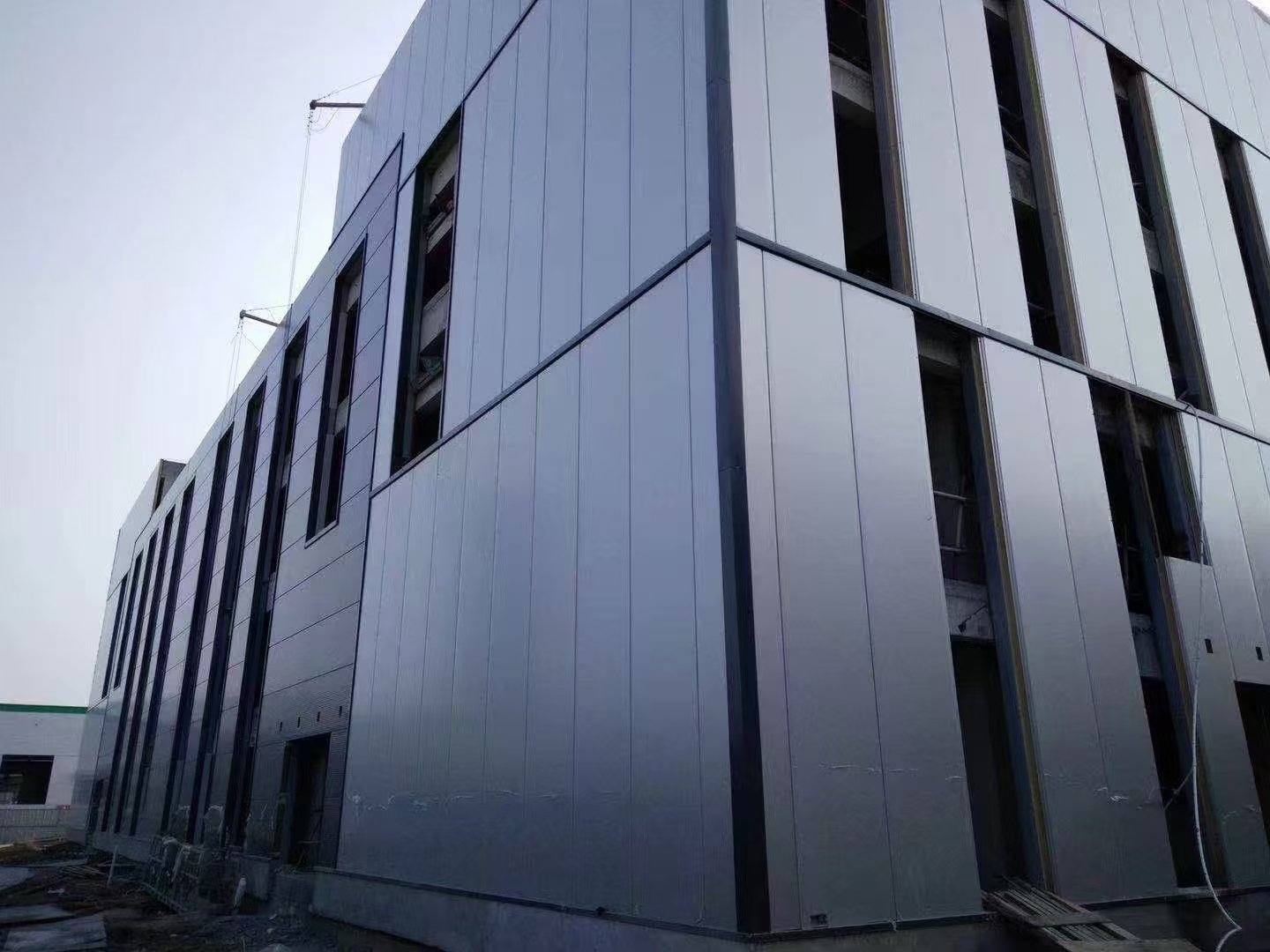
Sandwich Panel Core Materials Compared
| Core Material | Best For | Thermal Performance | Fire Rating | Relative Cost |
|---|---|---|---|---|
| PU (Polyurethane) | Industrial roofs, walls, cold storage | Excellent | B1 / B2 depending on formulation | Medium |
| PIR (Polyisocyanurate) | Cold rooms, freezers, fire-sensitive areas | Excellent | B1 common, can reach A2 | Medium-high |
| Rock Wool | Fire-rated walls, high-temperature zones, public buildings | Good | A1 / A2 | Medium-high |
| EPS (Expanded Polystyrene) | Budget warehouses, farms, temporary buildings | Good | B1 / B2 | Low |
PU Sandwich Panels
PU panels are the default choice for many industrial roofs and walls. The closed-cell polyurethane core delivers high thermal insulation with a relatively thin panel, which reduces overall envelope weight and transportation cost.
Typical specifications:
- Thickness: 50 mm – 200 mm
- Thermal conductivity: ~0.022 W/(m·K)
- Common fire rating: B2 (standard) or B1 (fire-retardant formulation)
- Applications: factory roofs, warehouse walls, cold storage ceilings
PU panels are cost-effective for large-area envelopes where the priority is insulation value and span capability.
PIR Sandwich Panels
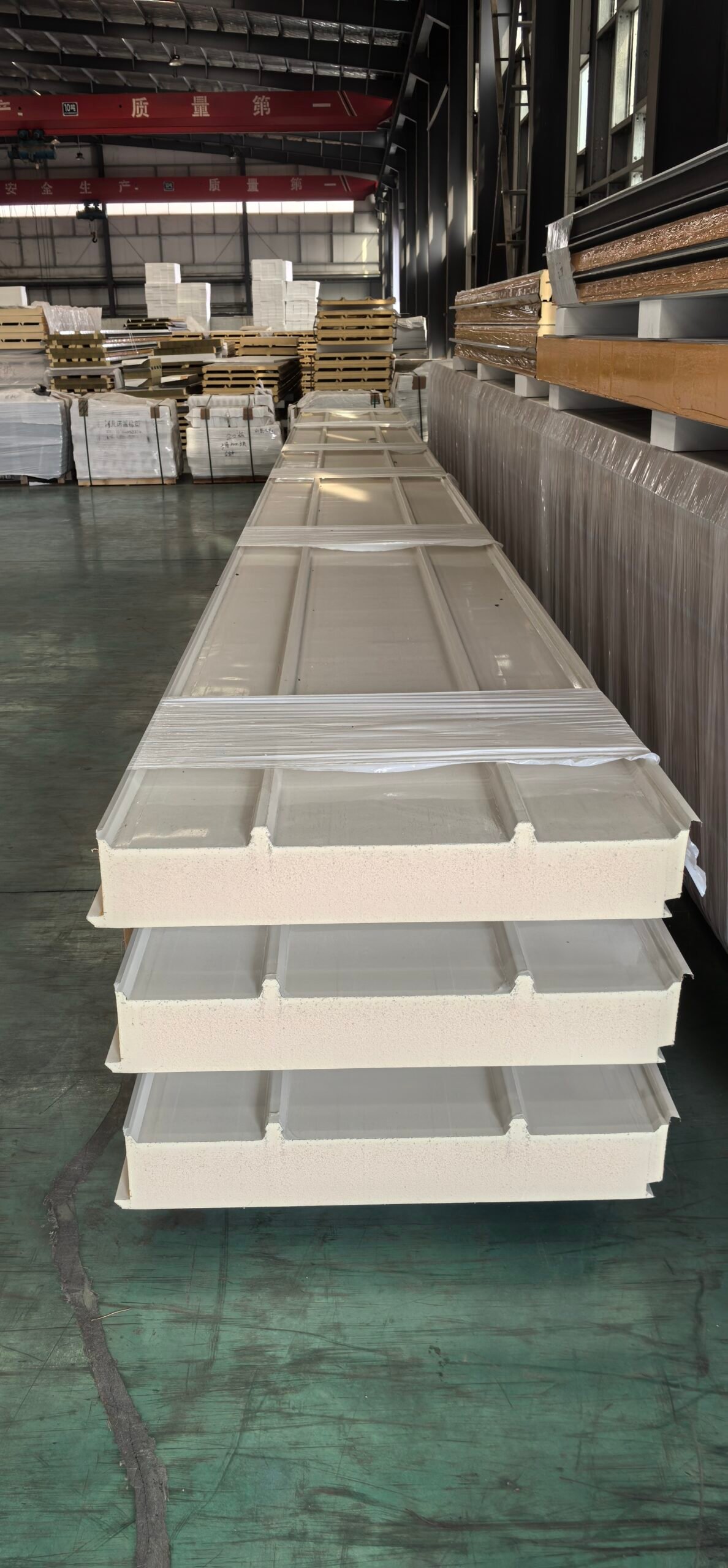
PIR is a modified polyurethane formulation with improved fire behavior and dimensional stability at low temperatures. It is the preferred core for cold rooms, freezer rooms, and projects where fire codes are stricter.
Typical specifications:
- Thickness: 50 mm – 200 mm
- Thermal conductivity: ~0.023 W/(m·K)
- Common fire rating: B1, with A2 options available
- Applications: cold storage, blast freezers, food processing, pharmaceutical clean rooms
PIR panels cost more than standard PU, but the upgrade is justified when fire rating or low-temperature performance is critical.
Rock Wool Sandwich Panels
Rock wool panels use mineral fiber as the core, providing the highest fire resistance of the common sandwich panel types. They are specified wherever fire separation, high-temperature resistance, or acoustic damping matters.
Typical specifications:
- Thickness: 50 mm – 200 mm
- Thermal conductivity: ~0.045 W/(m·K)
- Common fire rating: A1 or A2
- Applications: fire-rated walls, industrial buildings with strict codes, high-temperature workshops, public buildings
Rock wool panels are heavier than PU or PIR, so roof-span tables and purlin spacing must be checked carefully.
EPS Sandwich Panels
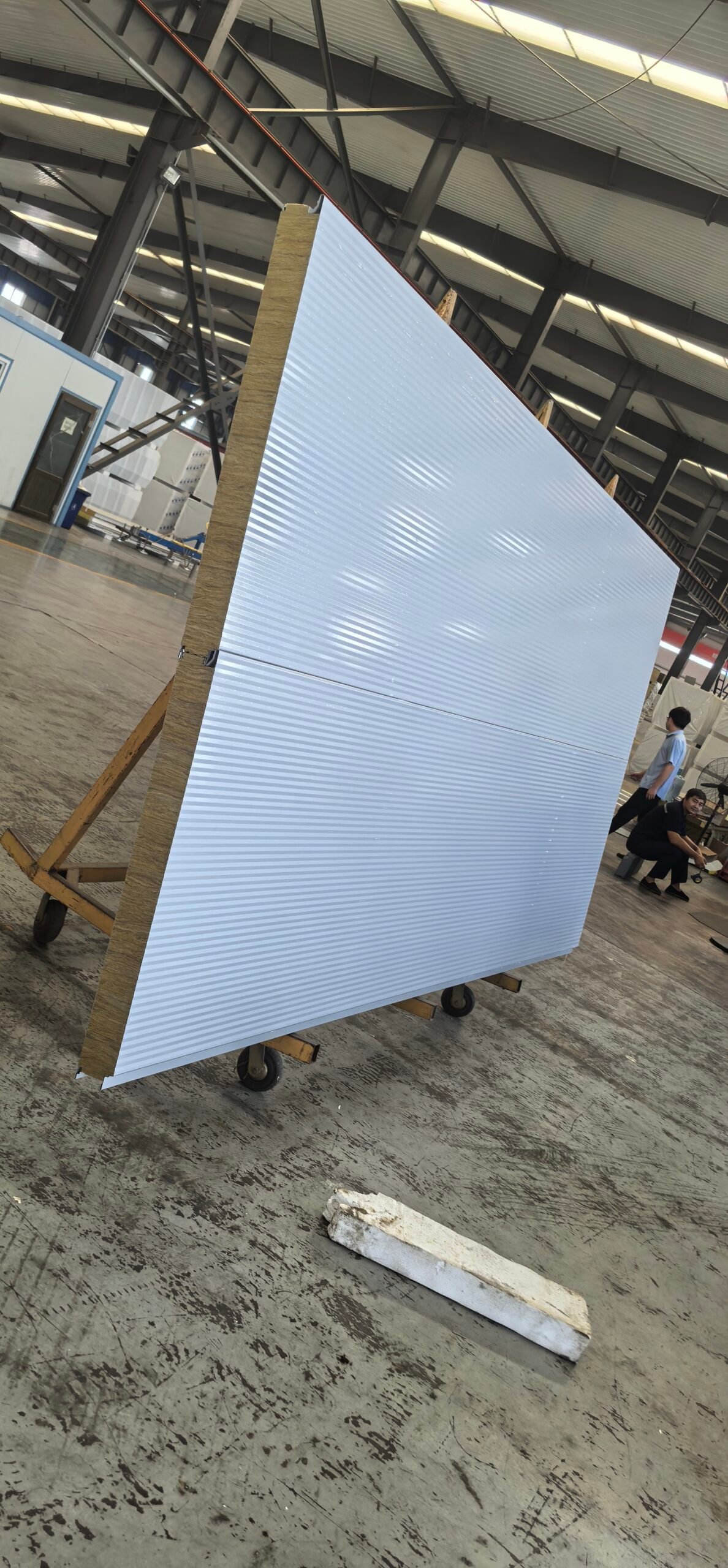
EPS panels offer the lowest initial cost and are widely used for agricultural buildings, light warehouses, and budget industrial projects. They insulate well but have lower fire resistance and structural rigidity than PU, PIR, or rock wool.
Typical specifications:
- Thickness: 50 mm – 200 mm
- Thermal conductivity: ~0.040 W/(m·K)
- Common fire rating: B2 or B1 with fire-retardant additive
- Applications: poultry farms, low-budget warehouses, temporary structures
How to Choose: A Decision Framework
Use this sequence when specifying a sandwich panel system:
- Define the building use: Cold storage, industrial production, warehouse, food processing, or agriculture?
- Set the fire-rating requirement: Check local codes. A1/A2 requirements usually point to rock wool. B1 requirements allow PU, PIR, or treated EPS.
- Calculate thermal performance: Determine the required U-value or insulation thickness based on climate and internal conditions.
- Check structural loads: Roof panels must handle snow, wind, and maintenance loads. Rock wool panels may need closer purlin spacing.
- Set the budget: EPS is cheapest, followed by PU, then PIR and rock wool at the higher end.
- Confirm coating and steel thickness: PVDF or HDP coatings improve durability. Steel thickness typically ranges from 0.40 mm to 0.80 mm.
Common Mistakes to Avoid
- Choosing thickness without calculating U-value: A 50 mm panel in a hot climate may not achieve the required insulation.
- Ignoring fire-code zoning: Mixed-use buildings may require fire-rated separation walls.
- Specifying EPS for high-temperature roofs: EPS can deform under sustained heat; PU or rock wool is safer.
- Overlooking joint detailing: Thermal bridging and water ingress often occur at panel joints, not through the core.
Project Example: Matching Material to Requirement
In a recent Indonesia industrial factory project, LIAOHE supplied 50 mm PU-edge rock wool roof panels across 13×40HQ containers. The buyer needed A-grade fire performance for a large roof area, but also wanted the panel-fit advantages of a PU edge seal. The hybrid specification met both the fire code and the installation requirements.
Get Specification Support
LIAOHE can help select panel thickness, core material, steel specification, and joint system based on project drawings and destination-market codes.
Request a sandwich panel specification review →
FAQ
Which sandwich panel is best for cold storage?
PIR is usually the best choice for cold storage and freezer rooms because of its low-temperature stability and B1/A2 fire-rating options.
Are rock wool panels waterproof?
Rock wool is water-repellent but not waterproof. Roof applications require proper membrane detailing and drainage design.
What is the difference between PU and PIR panels?
PIR is a thermally upgraded version of PU with better fire performance and dimensional stability, especially at low temperatures.
How thick should sandwich panels be?
Thickness depends on required U-value, climate, and budget. Industrial roofs commonly use 50–100 mm; cold storage may require 100–200 mm.
Can sandwich panels be used for both wall and roof?
Yes, but wall and roof panels have different load capacities, joint systems, and profile shapes. Always match the panel type to the structural design.